Inside Special Collections: Working with Photographs and Older Printed Books
- December 8, 2025
The River-side welcomes a guest post by Coraline Brun on her work placement in Special Collections & Archives during the past year. Coraline is a student in MA in History, Culture and Patrimony at École Nationale Supérieure des Sciences de l’information et des Bibliothèques where she is specialising in written and pictorial culture. Coraline spent four weeks working on the Liam Kennedy Photographic Collection and Green Coat School Library.
The First Task is to Catalogue: The Liam Kennedy Collection
Liam Kennedy was a photographer who worked from the 1930s to the 1980s and settled in Cork in the 1950s. He ran a lucrative portrait studio, worked for newspapers, took class photos in many schools around the county, and photographed weddings and official events, but he also documented Irish daily life during his fifty-year career.
To Catalogue and Describe
The first step in the process of adding a collection entry to a library database is to catalogue it. It is necessary to name and describe each item to provide a better understanding of the collection.
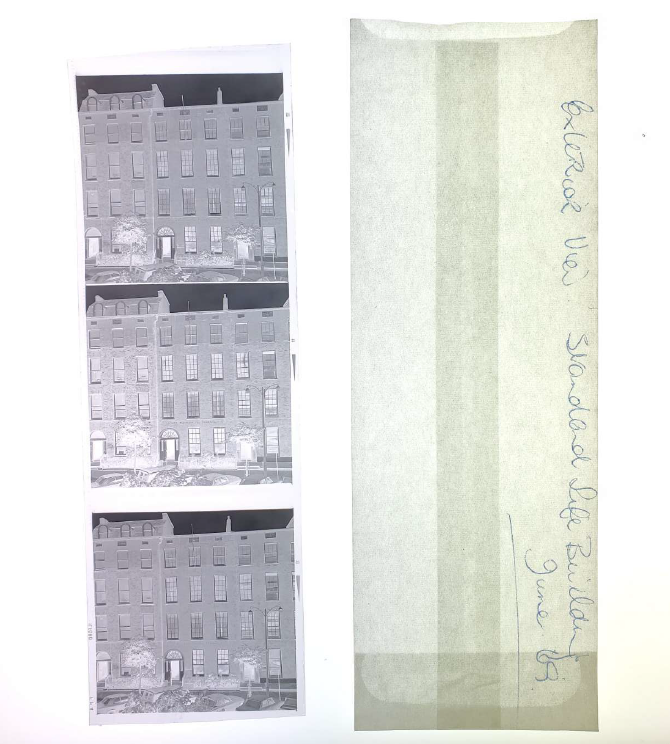
For the Liam Kennedy Photographic Collection, it is essential to preserve the organisational structure developed by the photographer. Each inscription made by the photographer is transcribed into the catalogue entry. However, it is also necessary to add comments and descriptions to help people understand the original filing system better, and each set of photographic negatives is described in specific detail.
To Rehouse
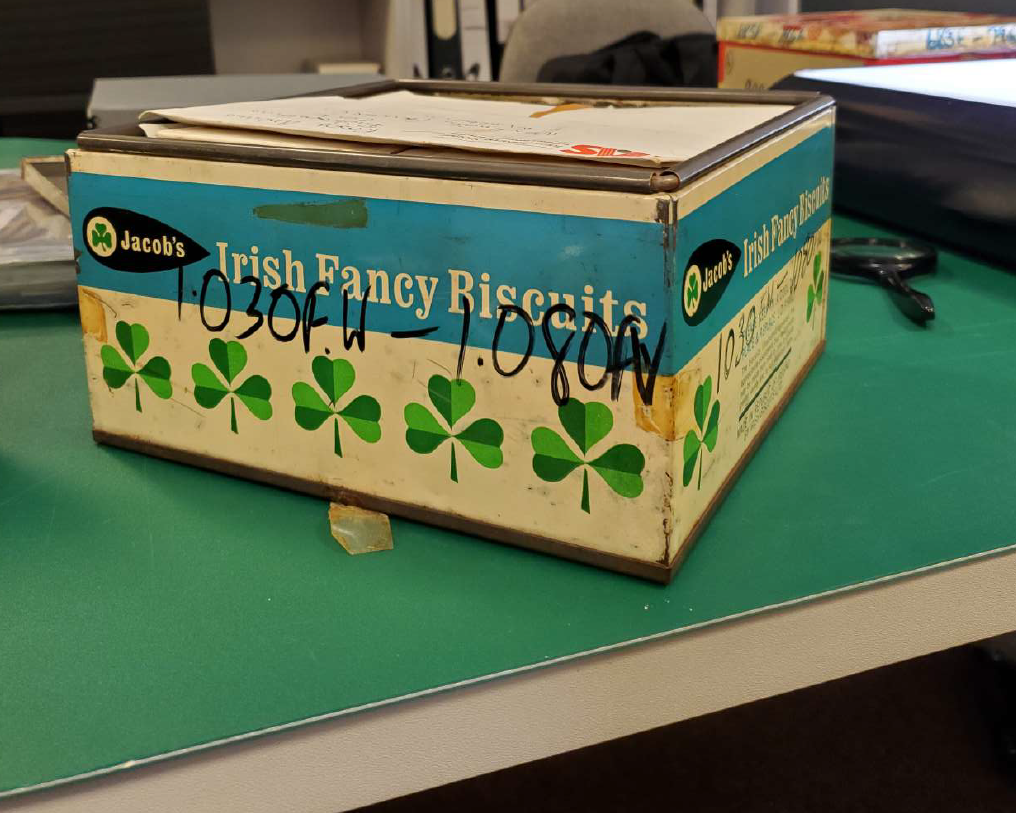
Liam Kennedy stored his negatives in glassine sleeves, which were wrapped in paper, and placed inside twenty biscuit boxes. To improve the condition and facilitate consultation of the negatives, it is important to rehouse the items, using archival materials, while maintaining the original order of the collection.
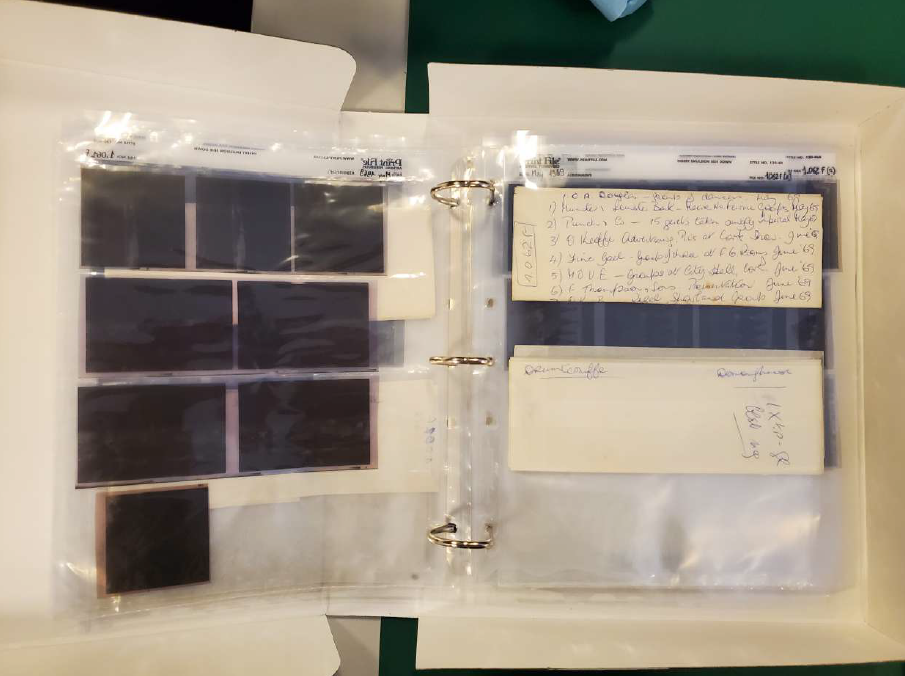
The content of each biscuit box is catalogued into a spreadsheet to capture the metadata needed to describe the collection. Once catalogued the negatives are then placed into archival sleeves and housed in an archival binder box. Liam Kennedy’s original order is followed using his own reference number as well as the chronology of the individual assignments and photo shoots.
Post-cataloguing Work: The Green Coat School Collection
The Special Collections & Archives service in UCC Library preserves books from the 15th century to the present. Among its holdings is the Green Coat School Collection, which is based on the library of the eponymous school, situated on Cork city’s northside. The collection comprises c. 280 books, primarily from the 17th and 18th centuries, as well as a small number of incunable. Many of the volumes still have their original leather bindings, decorated with leather and intricate tooling common at the time.
Although the collection has previously been catalogued, cataloguing is often an ongoing process. Books can always reveal new details, and checking existing records helps improve accuracy, provides richer descriptions, and supports conservation work so that students and researchers can continue to access and use these resources.
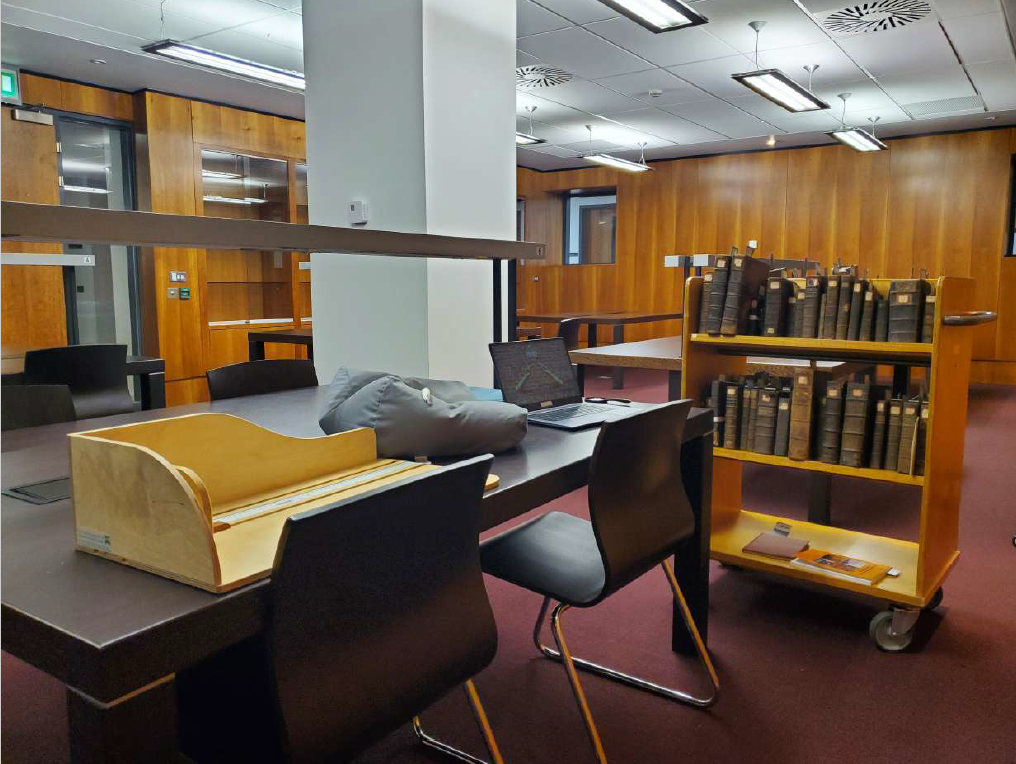
Reviewing the Library Catalogue
One of my main tasks was to verify the current catalogue entries. This meant checking for errors, adding missing information and ensuring consistency across records.
While it was common practice for several different texts to be bound together in a single volume, there is a risk that one of the texts was overlooked during the initial cataloguing of the collection. This was the case with a bound volume containing Meditations and Disquisitions upon the Lord’s Prayer by Sir Richard Baker (Green Coat School 226.96 BAKE), where a second text in the volume (Meditations and Disquisitions upon the Seven Psalmes of David) was identified as having not been catalogued.
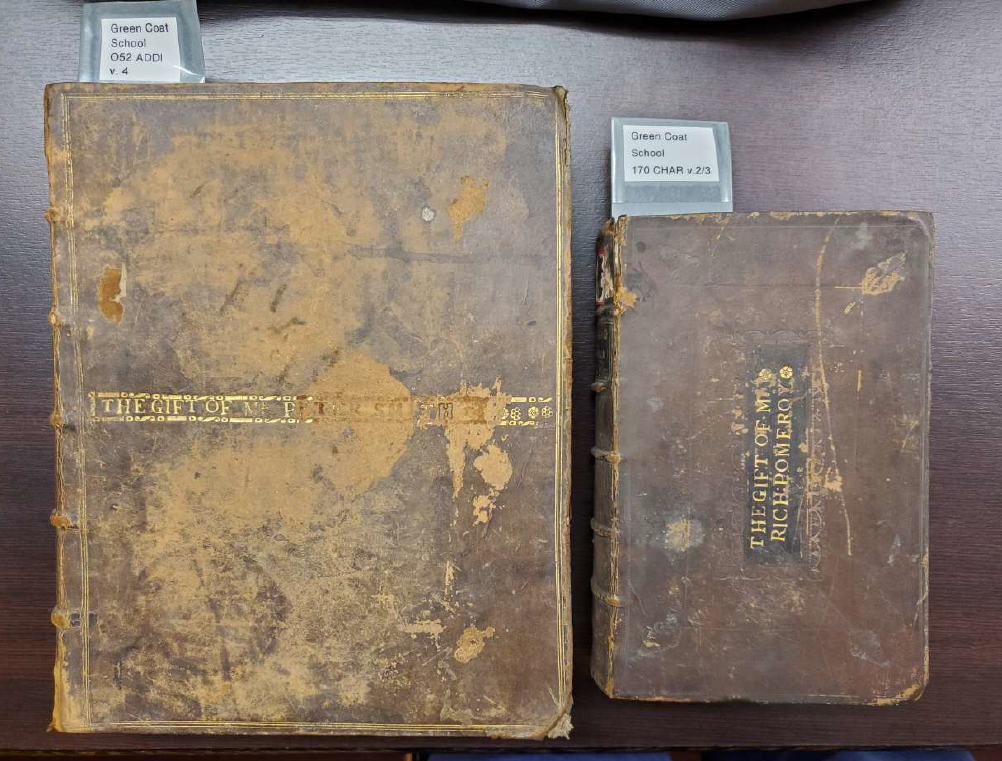
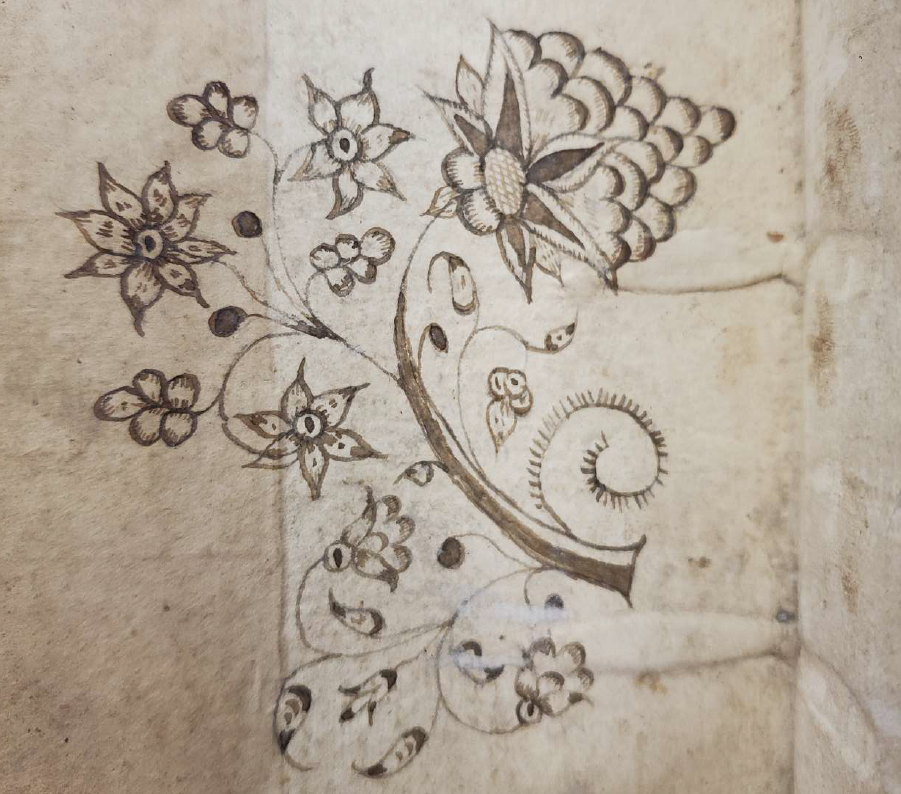
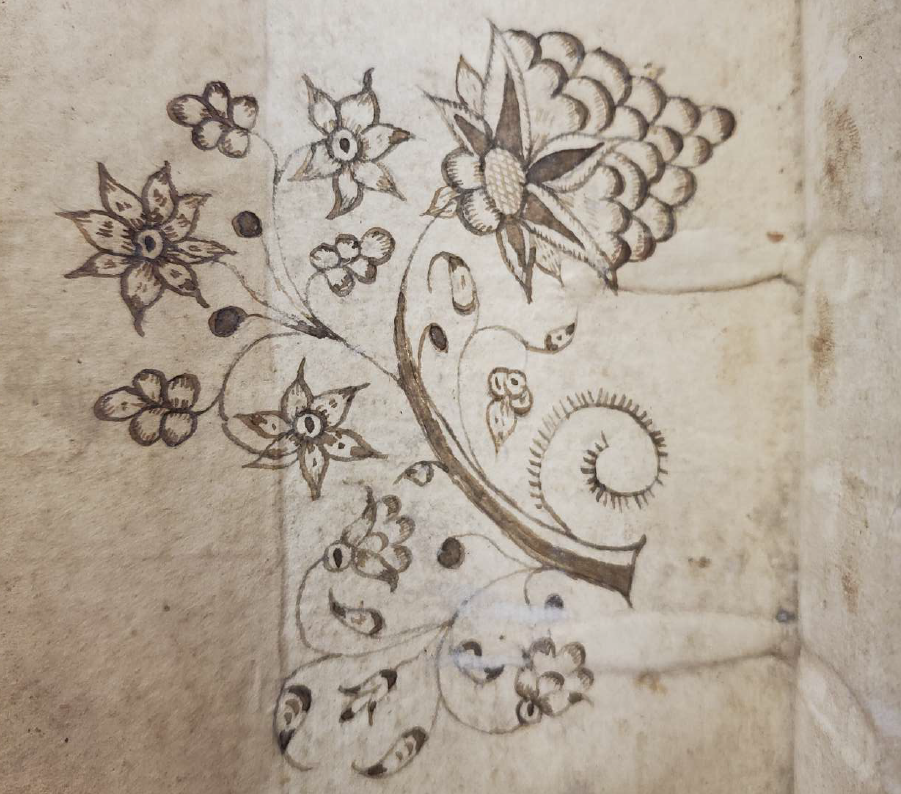
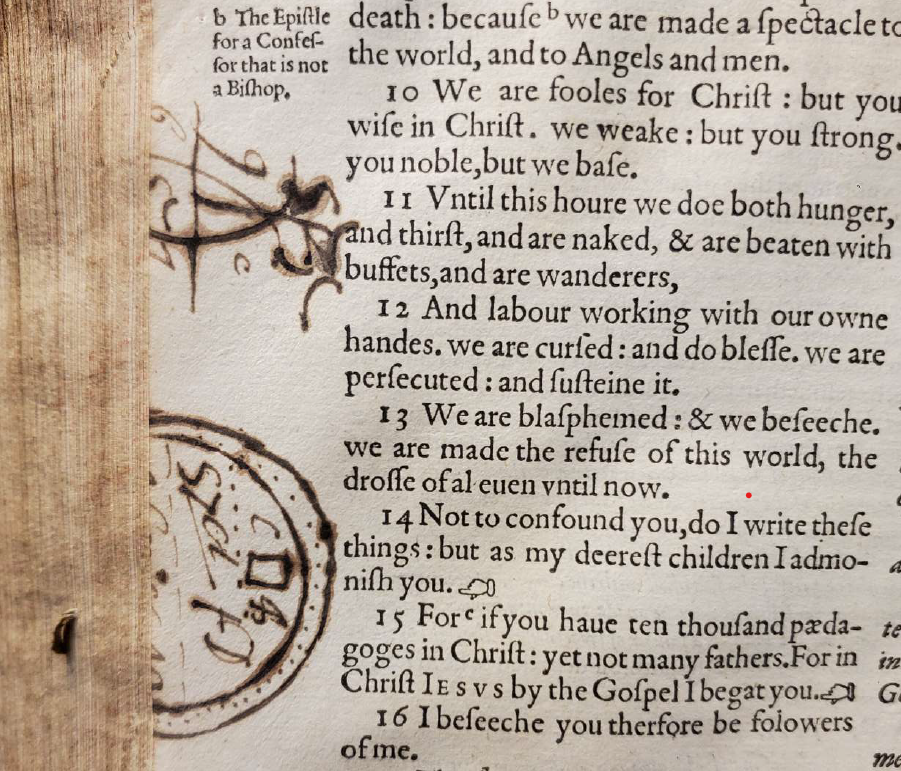
I was also responsible for logging details of ownership marks, such as tooling on bindings, or signatures and stamps inside the volume, often on the titlepage. Other features I logged included frontispieces, inserts, inscriptions, fragments, and decorated foredges. These details are important for understanding the history of the Green Coat School Library and provenance of the books in the collection.
Union Catalogues
Another part of the work involved linking the Green Coat School books to bibliographic databases which bring together records from multiple institutions. At UCC, the English Short Title Catalogue (ESTC) is the main tool for identifying early printed books published between 1473 and 1800, primarily in English. Unfortunately, many of the Green Coat School books have not yet been added to the ESTC. The main solution to this problem was to identify the ESTC record that accurately matched the edition held at UCC.
However, not all of the books in the Green Coat School Library fell within the scope of the ESTC. These included books printed on the continent in languages such as French and Latin, including titles published by the Elzevir. These are listed on the Universal Short Title Catalogue (USTC), which covers all early modern printed works. Learning about these catalogues has given me a better sense of how libraries around the world share information and make their collections discoverable.
Conservation Challenges
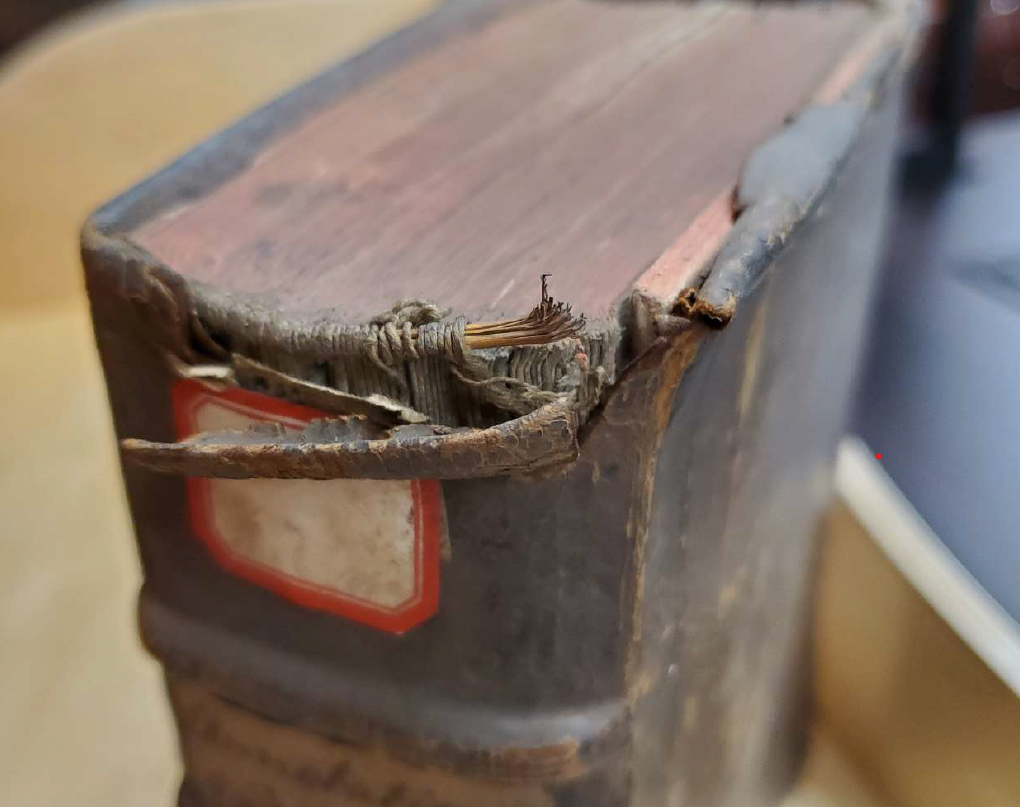
The final task is one of the most important. I produced a short condition note for each of the books in the collection to inform conservation priorities. Many are in poor condition because of previous damaging factors such as pests, humidity or the natural ageing of leather and paper.
Degradation was most noticeable on the bindings, especially on the leather cover, head cap and tail cap, and edges of the spine. Damage was often slight, except in some cases where the bindings were separated from the text block or have been lost entirely.
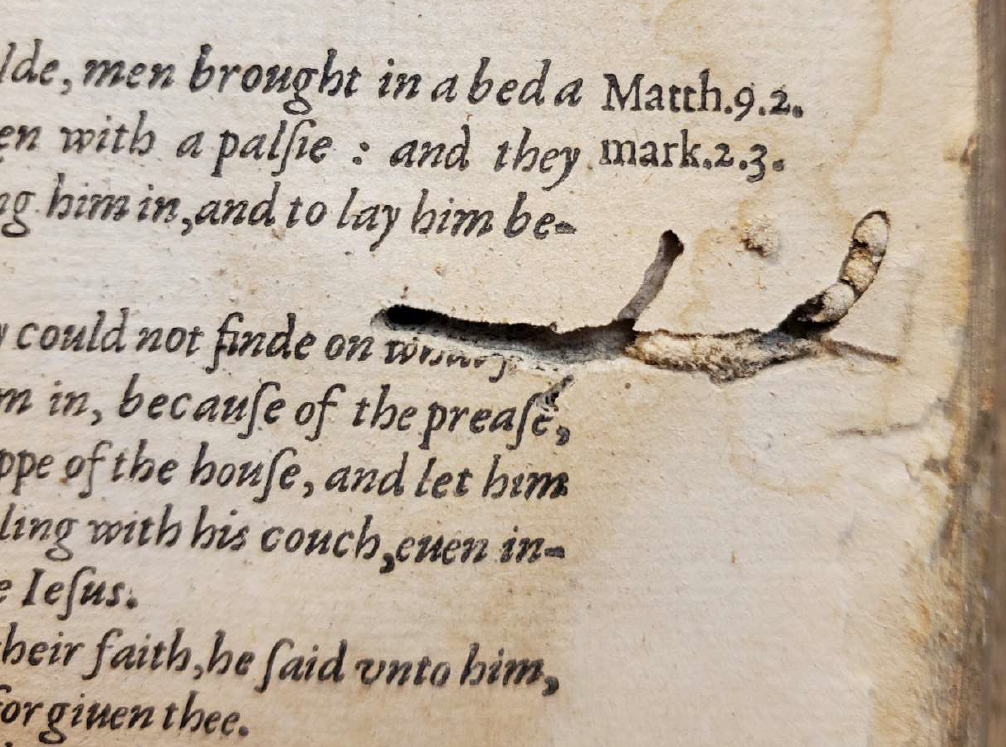
Pest damage is a result of insects feeding on the paper, leather, and glue. In certain cases, the larvae of the insect creates holes and tunnels in the text block and cover, weakening the binding and destroying parts of the printed text.
Humidity can damage the text block and the binding when dampness develops. Prior to the transfer of the collection to UCC, long term exposure to damp conditions resulted in a number of the books becoming distorted and warped.
To protect the collection from further damage, each book needs a custom-made phase-box. Measuring the height, width, and depth of every single volume is time-consuming, but it ensures the boxes fit properly and provides the best protection.
Bibliography
Green Coat School Collection. Special Collections, UCC Library.
Green Coat School Minute Book. U335. Special Collections, UCC Library.
McCann, Peadar. “Cork City’s Eighteenth-Century Charity Schools: Origins and Early History.” Journal of the Cork Historical and Archaeological Society (1979): 102-11.
Ó Coindealbháin, Seán. “Schools and Schooling in Cork City.” Journal of the Cork Historical and Archaeological Society (1943): 44-57.
Pinniger, David. Integrated Pest Management in Cultural Heritage. London: Archetype Publications, 2015.
